2025 Messiah Sings

Friday, December 19, 8:00 PM
Saturday, December 20, 3:00 PM
Cary Hall, Lexington

Featuring Jodie-Marie Fernandes, soprano; Laura Beth Couch, mezzo-soprano; Kartik Ayysola, tenor; Henrique Donato Neves, baritone

Featured artists

Jodie-Marie Fernandes, soprano

Soprano Jodie-Marie Fernandes is a devoted learner and performer of music. She recently featured as soloist with Cappella Clausura in Chiara Margarita Cozzolani’s Vespers and Ethyl Smyth’s Mass in D and is a cantor at St. Leonard’s Church in Boston. Ms. Fernandes has performed as soloist with the renowned Internationale Bachakademie Stuttgart and with the MIT Concert Choir. Her solo repertoire includes Vaughan Williams’s Dona nobis pacem; Johann Sebastian Bach’s Jesu, meine Freude; Brahms’s Ein deutsches Requiem; Handel’s Messiah, Poulenc’s Stabat Mater; Mozart’s Requiem; and Beethoven’s Mass in C, among others. She holds a Bachelor of Science in Electrical Engineering from MIT and a Graduate Performance Diploma in Vocal Performance from Longy School of Music.

Laura Beth Couch, mezzo-soprano

Laura Beth Couch, lauded by The Boston Musical Intelligencer for singing with “deep pathos” and “radiant affection,” is a mezzo-soprano living in Boston. Laura is thrilled to return as a soloist for another year of Messiah Sings with Masterworks Chorale. She earned her Performance Diploma from Boston University, where she performed as Julia Child in Bon Appétit, Dorothée in Cendrillon, Alice 2 in Alice Tierney, and Friedrich Bhaer in Little Women. Other favorite roles include Mrs. Lovett in Sweeney Todd (Opera51), Bradamante in Alcina (MassOpera), Mrs. Phagan in Parade (Lowell House Opera), Tisbe in La Cenerentola, La Ciesca in Gianni Schicchi, and Babette in Beauty and the Beast (Bay View Music Festival). Laura has been a soloist for Bach’s Magnificat, Bononcini’s Stabat Mater, Handel’s Messiah, Vivaldi’s Gloria, Mozart’s Coronation Mass, and Marianna Martines’s Dixit Dominus. A dedicated music teacher for over ten years, she earned her MM in Voice Performance from Shenandoah University and her BM in Music Education from Rutgers University. Coming up next, Laura will be performing as Strega in the world premiere of Beth Wiemann and Cecelia Raker’s Bog Hag Wine Night with Boston Opera Collaborative.

Kartik Ayysola, tenor

Indian-American tenor Kartik Ayysola performs frequently in Greater Boston and throughout New England.  This season, he appeared in Norma with Boston Youth Symphony Orchestra and Tosca with Opera Vermont.  He has also performed in Madame Butterfly and Aida with the Boston Lyric Opera. Kartik is a seasoned concert performer, appearing as a soloist in such works as Handel’s Messiah, Haydn’s Lord Nelson Mass, Mozart’s Requiem, and Bach’s Magnificat. A native of Dover, Pennsylvania, Kartik studied under Joseph Baunoch at Indiana University of Pennsylvania and then under Jerrold Pope at Boston University, and he is currently a student of Bradley Williams.

Henrique Donato Neves, baritone

Baritone Henrique Donato Neves is an experienced opera and oratorio singer. He is an alumnus of Juilliard Pre-College (2018), Harvard College (2022), and Harvard Law School (2025). He studied with Lorraine Nubar, faculty member at New England Conservatory and head of the Juilliard Pre-College Voice Department. In 2017, he won first place at the William E. Schmidt Youth Vocal Competition in New York. Mr. Neves was a Ferris Choral Fellow of the Harvard University Choir, which provides music at Harvard University’s Memorial Church. His operatic roles include Count Almaviva (Le nozze di Figaro), Papageno (Die Zauberflöte), and Guglielmo (Così fan tutte).

The Messiah Sings orchestra

Friday orchestra

VIOLIN I
Randall Hiller
Barbara Oren
Brenda Nishimura
Marc Abouaf
Corinne Auger 

VIOLIN II
Ted Sussman
Bill Hollman
Joey Um
Pauline Jeong 

VIOLA
Jan Lerbinger
Tze-Ping Low
Mary Hecht
Alexa Manickas
Samantha Choi

CELLO
Pip Moss
Kurt Roth
Ellie Cho
Hannah Jeong
Jon Dreyer 

CONTRABASS
Reed Valleau
Alberto Crema 

OBOE
Emily Richmond
Kate Sexauer

BASSOON
Ed Fritton

 TRUMPET
Brian Bunnell
Sally McInnis

 TIMPANI
John Tarrh 

HARPSICHORD
John Sullivan

Saturday orchestra

VIOLIN I
Corinne Auger
Kathryn Hathaway
Brenda Nishimura
Celia Shneider 

VIOLIN II
Ted Sussman
Bill Hollman
Laura Hamill
Al Leisinger 

VIOLA
Jan Lerbinger
Tze-Ping Low
Mary Hecht
Gwendoline Thornblade
Scott Smith
Michael Hamill 

CELLO
Pip Moss
Kurt Roth
Jon Dreyer
Susan Lucker 

CONTRABASS
Reed Valleau
Alberto Crema 

OBOE
Kate Sexauer
Emily Richmond 

BASSOON
Ed Fritton 

TRUMPET
Brian Bunnell
Sally McInnis 

TIMPANI
John Tarrh 

HARPSICHORD
John Sullivan

About Handel’s Messiah

George Frideric Handel’s greatest contribution to music—the English oratorio—was an innovation brought about almost by accident. In the late 1730s Handel found himself reacting to the Bishop of London’s prejudice against stage performance and to the middle-class English public’s appreciation of familiar Bible stories, treated in an epic style, combining entertainment with edification. Having composed many Italian operas for the London stage by then, Handel was reluctant to abandon the theatre, and so he created the English oratorio—a musical drama with a text based on religious themes, without scenery or costumes, and thus apt to be performed in the theater during Lent, when operas were forbidden.

Handel’s oratorios are a remarkable synthesis of elements found in the English masque and anthem, the French classical drama, the Italian serious opera and oratorio volgare (Italian oratorio), and the German protestant oratorio. Compared to his operas, Handel’s 26 English oratorios make much greater use of the chorus. Representing the Israelite nation or sometimes their enemies, the chorus consistently plays a central role in the action and occasionally draws a moral (reminding us of the double function of the Greek chorus in the tragedies).

Most oratorios have a central theme derived from the facts of human experience, often enacted by individual leaders (e.g., Saul, Samson, Belshazzar, Theodora, and Jephtha). Israel in Egypt and Messiah, however, stand apart. Both are choral epics, with words taken exclusively from the Bible and without a plot in the ordinary sense of the term. Unlike most of Handel’s other oratorios, they do not have dramatic “characters” in the usual theatrical sense.

The librettos of Handel’s oratorios, except Messiah and Theodora, are all based on the Old Testament or the Apocrypha and even Messiah contains more texts from the Old Testament than the New, despite its Christian theme. The Old Testament subject matter, which was considerably modified by the librettists, had a strong appeal to Handel’s audiences. Not only were they generally familiar with the stories, but they perceived a parallel between the Israelites and the English of their own time: both were intensely nationalistic and led by heroic figures, and both regarded themselves as being under the special protection of God, who was worshipped with pomp and splendor.

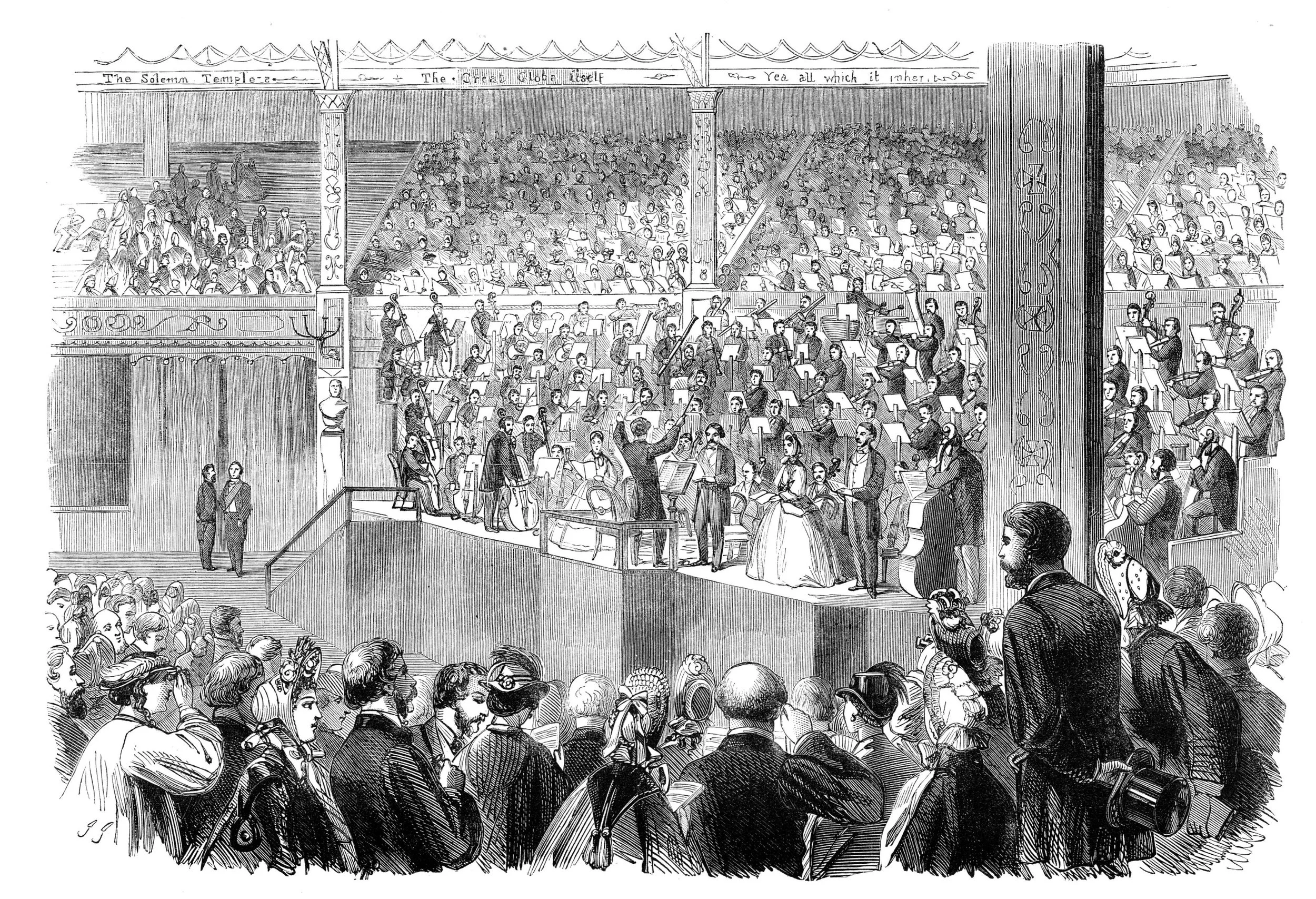
In 1741, on his own initiative, Charles Jennens (1707-1773), a graduate of Oxford, wrote the libretto—a “Scripture Collection” called Messiah. He then offered it to Handel, who immediately started to compose the music for it as he was already scheduled to visit Dublin in November and wanted to finish before leaving. The entire oratorio was composed between August 22 and September 14, 1741. It was premiered in Dublin on April 13, 1742, at a benefit concert for three charities. On March 27, 1742 The Dublin Journal and the Dublin News-Letter announced: “For Relief of the Prisoners in the several Gaols, and for the Support of Mercer’s Hospital in Stephen’s Street and of the Charitable Infirmary on the Inns Quay, on Monday the 12th of April, will be performed at the Musick Hall in Fishamble Street, Mr. Handel's new Grand Oratorio, call’d the MESSIAH, in which the Gentlemen of the Choirs of both Cathedrals [Christ Church and St. Patrick’s Cathedral] will assist, with some Concertoes on the Organ, by Mr. Handell.”

After the premiere the journal reported: “On Tuesday last Mr. Handel’s Sacred Grand Oratorio, the MESSIAH, was performed at the New Musick Hall in Fishamble-street; the best Judges allowed it to be the most finished piece of Musick. Words are wanting to express the exquisite Delight it afforded to the admiring crouded Audience. The Sublime, the Grand, and the Tender, adapted to the most elevated, majestick and moving Words, conspired to transport and charm the ravished Heart and Ear. It is but Justice to Mr. Handel, that the World should know, he generously gave the Money arising from this Grand Performance, to be equally shared by the Society for relieving Prisoners, the Charitable Infirmary, and Mercer’s Hospital, for which they will ever gratefully remember his Name.” In fact, the hall was so full at the rehearsal that for the performance ladies were asked to come without Hoops, and gentlemen were asked to leave their swords at home, to make room for more people.

The text of Messiah is entirely from the sacred texts that were familiar to the English public. The text is divided into three parts, of which only the central one includes some recounting of action, and all of it violent. The first part, the “Christmas” part, functions as a prologue, while the third functions as an epilogue. The narrative is confined to the second part. Part I prophecies the Messiah’s imminent arrival and then turns to the story of Jesus’ birth and the fulfillment of the prophecy. The second act, the “Easter” part, recounts Christ’s crucifixion and his resurrection (and thus ends with the famous “Hallelujah” chorus—the story is over, what follows is the explanation of it), while Part III represents the redemption through faith, through a meditation on the previous narration, on Christ’s second coming and his role in the salvation of the humans.

The arias and ensembles in Handel’s oratorios generally resemble those of contemporary Italian opera in the expression of their affections but less so in their structure. The most popular parts of Messiah, however, are certainly its choruses, some of which have achieved independent fame. The initial scenes of the oratorio are cast in the customary sequence of recitative-aria-chorus. This pattern, however, breaks up as soon as the narrative starts to develop, as can be seen in particular in the succession of choruses representing the crowd at the beginning of the second part. The most striking feature of Handel’s choruses in the oratorios is their immense stylistic variety among themselves and within each. Striking contrasts of texture, particularly, as well as contrasts of melodic, rhythmic and harmonic procedures within the choruses and large choral complexes are frequent.

Handel seems always to have been acutely aware of the expressive possibilities of the words in his choruses, and his text settings abound in striking effects of word-painting and symbolism. A prime example is in the soprano recitative “There were shepherds abiding in the field,” which starts as a dry recitative and switches to accompanied recitative when the words mention the arrival of the angel of the Lord, with the violins mimicking the movement of the angel’s wings. One can hear the bleating of the sheep in “All we like sheep;” the tenor cleverly depicting in musical lines his words "crooked," "straight," "exalted," “low,” and "plain;" the actual trumpet in the bass aria “The trumpet shall sound,” with the voice imitating the instrument; or in the chorus “Glory to God” as Handel calls for the high voices and strings to depict the heavenly voices as they cry "Glory to God" and the lower voices to depict "peace on earth." And so many more it’s impossible to list. But the attentive listener will have much fun finding them thoughout.

A last word regarding borrowing and self-borrowing. Even though the practice of using previously existing music in new settings, with more or less extensive changes, was widespread in the Baroque, Handel has often been accused of having made excessive use of the practice, silently incorporating whole compositions by him and others into his works. This, of course, results in works of uneven quality, lacking cohesiveness. A main culprit is Israel in Egypt, in which 18 out of 39 numbers are borrowed. In Messiah, Handel only used his own music (except for the theme of “And with his stripes” which has been used by many composers, and that of the pastoral symphony “Pifa,” which is a theme of the Italian pifferai). He took as the basis for six numbers three Italian duets for two sopranos he had composed shortly before. The choruses “For unto us a Child is born” and “All we like sheep have gone astray” are adapted from the duet for two sopranos “No, di voi non vo’ fidarmi” dated 3 July 1741; the choruses “His yoke is easy” and “And He shall purify” are adapted from another such chamber duet of 1 July 1741, “Quel fior che all’alba ride,” and the duet “Se tu non lasci amore” was the basis for the duet “O death, where is thy sting” and the following chorus “But thanks be to God.” Even though the melodies of the incorporated duets were more suitably illustrative of their original Italian words than of the sentences of Scripture to which Handel adapted them, I believe that if performed with the correct affect they are perfectly suited to their new surrounding and convey the new text quite effectively.

All in all, Messiah offers the greatest possible variety of musical styles and of affects, from the contemplative and inward-looking to the most explosively joyous. It also offers the opportunity to discover something new every time, even to those who know the piece like the back of their hands—a word illustration one might not have noticed, an inner voice weaving a counterpoint, a new way of interpreting what the music is saying, or even some hilarious instances of the music setting showing us Handel’s English was not perfect (like when he places the musical accent on the wrong syllable of the word). It’s altogether a joyous and happy piece—enjoy!

-Alexandra Amati, PhD

Cary Hall

1605 Massachusetts Ave, Lexington, MA 02420

Parking and directions

Cary Hall is accessible via the MBTA bus route 62.

Parking is available in nearby municipal lots and at on-street metered spaces. There are spaces for those with handicapped placards in the driveway in front of the venue.

Support our Messiah Sings

We ask participants to make a suggested donation of $15.

If you want to donate before the event, you can make a secure donation online by clicking the button below.

Donate now